






Intradural disk herniation (IDH) refers to the protrusion of the nucleus pulposus into the dural sac. While disk herniation is a relatively frequent condition, the intradural variant is exceptionally rare. Patients diagnosed with IDH often exhibit more pronounced clinical symptoms compared to those with extradural herniations. Establishing a definitive preoperative diagnosis remains challenging, as the pathophysiology and radiological features are not yet fully understood. Differentiating IDH from other intradural extramedullary pathologies, including schwannomas, neurofibromas, meningiomas, or metastatic lesions, can be complex.
A systematic review was conducted on the diagnosis and treatment of cervical, thoracic and lumbar IDH, following PRISMA guidelines (Preferred Reporting Items for Systematic Reviews and Meta-Analyses) and retrieving potentially relevant literature from PubMed and Embase. The search strategy included combinations of the terms “transdural” OR “intradural” AND “disc” AND “herniation”. Age, sex, symptoms, herniated disk level, history of trauma, location of disk mass, imaging examination, pre- or intraoperative diagnosis and clinical outcomes were studied through the medical records. The type of surgery, the ventral dural defect management and the postoperative leakage of cerebrospinal fluid were also evaluated.
One hundred and sixty-one articles involving 285 patients were selected. Cases of IDHs occurred at the lumbar (64.3%), thoracic (21.9%) and cervical (13.8%) levels. The most common level IDH was located at L4–L5 (27.6%). 49 patients exhibited cauda equina syndrome. Only 44 patients (15.4%) were diagnosed as having IDH preoperatively, while most patients were diagnosed intraoperatively. Neurological functions improved variably according to cervical, thoracic and lumbar locations (respectively 2.5%, 5.6% and 21.7%).
IDH mostly involves the lumbar spine. Patients with IDH generally experience more severe symptoms than those with extradural disk herniation and have incomplete recovery of postoperative neurological functions. Diagnosing IDH remains challenging given its clinical presentations and radiographic features, and it is likely an underdiagnosed and underestimated condition.
La hernia discal intradural (HDI) se refiere a la protrusión del núcleo pulposo dentro del saco dural. Aunque la hernia discal es una afección relativamente frecuente, su variante intradural es excepcionalmente rara. Los pacientes con diagnóstico de HDI suelen presentar síntomas clínicos más intensos en comparación con aquellos con hernias discales extradurales. El diagnóstico preoperatorio definitivo sigue siendo un reto, ya que tanto la fisiopatología como las características radiológicas no se comprenden completamente. Diferenciar la HDI de otras patologías intradurales extramedulares, como schwannomas, neurofibromas, meningiomas o lesiones metastásicas, puede resultar complejo.
Se realizó una revisión sistemática sobre el diagnóstico y tratamiento de las HDI cervicales, torácicas y lumbares, siguiendo las directrices de Elementos de Información Preferidos para Revisiones Sistemáticas y Metaanálisis (PRISMA). Se consultaron las bases de datos PubMed y Embase utilizando las combinaciones de términos: «transdural» OR «intradural» AND «disc» AND «herniation». A partir de los registros médicos se analizaron: edad, sexo, síntomas, nivel discal afectado, antecedentes traumáticos, localización de la masa discal, estudios de imagen, diagnóstico pre o intraoperatorio y evolución clínica. También se evaluaron el tipo de cirugía, el manejo del defecto dural ventral y la presencia de fuga de líquido cefalorraquídeo en el posoperatorio.
Se seleccionaron 161 artículos que incluyeron un total de 285 pacientes. Los casos de HDI se localizaron en la columna lumbar (64,3%), torácica (21,9%) y cervical (13,8%). El nivel más frecuentemente afectado fue L4–L5 (27,6%). Cuarenta y nueve pacientes presentaron síndrome de la cola de caballo. Solo 44 pacientes (15,4%) fueron diagnosticados con HDI antes de la cirugía, mientras que en la mayoría el diagnóstico se estableció intraoperatoriamente. La recuperación neurológica fue variable según la localización: cervical (2,5%), torácica (5,6%) y lumbar (21,7%).
La HDI afecta principalmente a la columna lumbar. Los pacientes suelen presentar síntomas más severos que en las hernias extradurales, y la recuperación neurológica postoperatoria tiende a ser incompleta. El diagnóstico sigue siendo un desafío debido a las características clínicas y radiológicas, por lo que probablemente se trate de una entidad infradiagnosticada y subestimada.
Intradural disk herniation (IDH) was initially reported in 1942 by Dandy, who documented a case of lumbar intradural disk rupture.1
Subsequent reports have described cervical and thoracic cases in 1959 and 1987, respectively.2,3
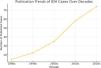
IDHs are infrequent and represent an unusual complication arising from disk protrusions. They account for approximately 0.3% of all disk herniation cases. On the other hand, there has been an upward trend in publications on IDH cases over recent decades, highlighting that this condition is probably underdiagnosed and underestimated (Fig. 1).

The exact pathogenesis and progression remain unclear, though adhesions between the annulus fibrosus, posterior longitudinal ligament (PLL), and anterior dura mater are believed to be contributing factors.
Preoperative diagnosis of IDH is challenging. Various neuroimaging techniques, including CT scans, MRI, myelography, and discography, have been described in the literature to evaluate the presence of an IDH.4,5 Despite this, preoperative diagnosis is rare, with most cases diagnosed intraoperatively.6,7
The treatment of IDH poses additional challenges. Literature suggests that IDH should be treated as early as possible, emphasizing the necessity for prompt surgical intervention.8
Considering its rarity and the difficulties associated with diagnosis and management, a systematic review of literature regarding cervical, thoracic and lumbar IDH reported in literature was conducted. The objective of this study is to better evaluate the clinical characteristics of this condition and to suggest optimal strategies for detection and treatment.
Materials and methodsLiterature searchThis systematic review was performed in accordance with the PRISMA (Preferred Reporting Items for Systematic Reviews and Meta-Analyses) guidelines (see Fig. 1, Supplementary Material).9 Relevant studies were identified through searches in PubMed and Embase. No chronological limits of study publications were included. The final search was conducted on 5th of December 2024 (see Table 1, Supplementary Material).
The search utilized combinations of the keywords “transdural” OR “intradural” AND “disc” OR “disk” AND “herniation”. The abstracts were read for possible full text review and inclusion. Articles were screened and selected independently by two reviewers (A. M. and E. L. B.). Disagreements were resolved by discussion, and a third author (A. S.) conducted an independent review if agreement was not reached.
Inclusion and exclusion criteriaThe full text of articles written in English published and involving human subjects were reviewed. Prospective clinical trials, retrospective studies, reports of case series and case reports with data on cervical, thoracic and lumbar IDHs were eligible for inclusion. Cadaver studies, laboratory or animal studies were excluded. Meta-analyses and systematic reviews were not included.
Data extractionThe names of the first and corresponding authors, type of study, publication date, number of patients, age, sex, symptoms, herniated disk level, history of trauma, location of disk mass, imaging examination, pre- or intraoperative diagnosis and clinical outcome were extracted. The type of surgery, the ventral dura defect management and the postoperative leakage of cerebrospinal fluid, when specified, were also evaluated.
ResultsStudy selectionA total of 2320 studies and case reports published up to 2023 were identified. 1359 records after duplicates were analyzed. Of these, 103 were excluded due to non-English language, 41 was a systematic review, 168 involved animal articles, and 22 had unavailable full-text. Ultimately, papers were removed after review of titles and/or abstracts. In the end, 161 articles describing 285 patients were included in this systematic review.4,5,7,8,10–111,6,112–163 The selection process is shown in Fig. 1, Supplementary Material.
Study characteristicsThe included studies were 147 case reports and 14 case series.4,5,7,8,10–111,6,112–163 The articles were published to 2024. The numbers of patients in the reported studies ranged from one to thirty. See Table 2, Supplementary Material.
Patient characteristicsThe average age of the patients in the articles was 54.1 years (range, 24–90 years). Among the patients, 58.94% (n=168) were male and 40% (n=114) were female (in 3 cases, gender was not available). The cases of IDHs occurred at the lumbar (64.3%), thoracic (21.9%) and cervical (13.8%) levels. The most common involved level was L4-L5 (27.6%, n=76), followed by L2–3 (15.2%, n=42), L3–L4 (12.3%, n=34). Relevant spinal trauma was noted in 17 cases (6%), with trauma mechanisms including neck manipulation and motor vehicle accidents. Additionally, 50 cases (17.5%) had a history of previous surgical procedures.
PresentationThe most common presentation was radiculopathy with or without muscle weakness (56.5%, n=161), followed by bowel and bladder disfunction (17.2%, n=49), paraparesis with other symptoms as ataxic gait or radiculopathy (6.7%, n=19), only paraparesis (7.4%, n=21), postural headache in hypotension liquoral (4.2%, n=12), Brown–Sequard's syndrome (BSS) and radiculopathy (2.5%, n=7), BSS/incomplete BSS (1.4%, n=4), BSS and Horner's syndrome (1.1%, n=3). Nine cases (3%) remain unspecified. The clinical presentation was classified according to the location in Table 1.
The presentations of patients and surgical procedures and outcomes.
| The presentations of patients | Surgical procedures and outcomes | ||
|---|---|---|---|
| Cervical presentation | Cervical | ||
| N=71 | Radiculopathy with or without muscle weakness | N=24 | ACDF |
| N=21 | Paraparesis | N=4 | ACCF |
| N=11 | Bowel and/or bladder disfunction | N=6 | Anterior+posterior approach |
| N=14 | Postural headache | N=4 | Posterior approach |
| N=10 | Paraparesis with other symptoms as ataxic gait or radiculopathy | Thoracic | |
| N=7 | BSS and radiculopathy | N=17 | Laminectomy |
| N=4 | BSS/incomplete BSS | N=5 | Fusion with screws |
| N=3 | BSS and Horner's syndrome | Lumbar | |
| Thoracic presentation | N=76 | Laminectomy | |
| N=9 | Paraparesis with other symptoms as ataxic gait or radiculopathy | N=25 | Fusion with screws |
| N=8 | Postural headache | Outcomes | |
| N=4 | Bowel and/or bladder disfunction | N=85 | Complete recovery |
| Lumbar presentation | N=108 | Incomplete recovery | |
| N=90 | Radiculopathy with or without muscle weakness | N=83 | Not described |
| N=34 | Bowel and/or bladder disfunction | ||
| Location of disk mass | |||
| N=107 | Central | ||
| N=41 | Right | ||
| N=36 | Left | ||
| N=92 | Non described | ||
| Imaging examination | |||
| N=174 | Only MRI | ||
| N=53 | MRI+CT | ||
| N=27 | MRI+CT+Myelography | ||
| N=15 | XR+Myelography | ||
| N=7 | CT+Myelography | ||
BSS=Brown–Sequard's syndrome; HS=Horner's syndrome; ACDF=anterior cervical discectomy and fusion; ACCF=anterior cervical corpectomy and fusion.
Myelography, computed tomography (CT), and Magnetic resonance imaging (MRI) were the three most commonly used imaging techniques for IDH. In this review, all patients underwent at least one examination using these techniques. 174 patients underwent only MRI. Additionally, 53 patients (18.6%) underwent both MRI and CT, while 27 patients (9.5%) had MRI, CT, and myelography (Fig. 2a). Nine cases (3.2%) remain unspecified.

The most common location of disk mass was central (37.5%, n=107); followed by the right (14.4%, n=41), and left (12.6%, n=36) positions. In 101 patients (35.4%) the location of disk mass was not specified.
These data are summarized in Table 1.
Diagnosis, surgery and outcomesPreoperative diagnosis of IDH was achieved in only 44 patients (15.4%), with the remaining 232 cases (81.4%) being identified intraoperatively. Nine cases (3.2%) remain unspecified. All patients underwent surgery. The surgical procedures are summarized in Table 1. In the remaining 115 patients, the surgical technique was not described in detail.
Neurological function improved completely in the post-operative period in 85 patients (29.8%): specifically, 7 patients (2.5%) with cervical, in 16 patients (5.6%) with thoracic, in 62 patients (21.7%) with lumbar IDHs. Instead, there was an incomplete recovery in 108 patients (37.9%). In 83 cases (29.1%), the postoperative neurological function was not described (Fig. 2b).
Dura managementDuring anterior cervical surgery, 17 cerebrospinal fluid (CSF) leakages of varying degree were encountered before dura incision, which indicated a breach of the arachnoid mater.
The method used to repair the breach of the arachnoid mater at cervical, thoracic and lumbar level included direct suture, fat or fascia graft with fibrin glue, surgical (cellulose matrix), dural substitute, and gelatin sponge.
The dura defect management is summarized in Table 2.
Dura defect management.
| CSF leakage during anterior surgery | |
| N=17 | Yes |
| N=18 | Not described |
| N=3 | No |
| Ventral dura defect management | |
| N=38 | Only suture |
| N=21 | Suture with other material |
| N=25 | Dural substitute |
| N=144 | Not described |
| N=48 | Other material (Graft and fibrin glue, Surgicel, Gelatin sponge, Fibrin glue) |
| Postoperative CSF leakage | |
| N=9 | Yes |
| N=57 | No |
| N=210 | Not described |
Intradural disk herniation (IDH), characterized by the displacement of the nucleus pulposus through the posterior longitudinal ligament (PLL) and dural sac into the intrathecal space, was first described by Walter E. Dandy in 1942. Despite its historical recognition, IDH remains exceedingly rare, accounting for an estimated 0.04–0.33% of all lumbar disk herniations. In our systematic review, IDH was reported more frequently in male patients (81.16%) than in females, with an average age of 54.5 years at diagnosis. The lumbar spine was most commonly affected (64.3%), followed by the thoracic (21.9%) and cervical (13.8%) regions. The L4–L5 level represented the most frequent site of involvement.
The precise etiology of IDH remains poorly understood. However, intraoperative findings often demonstrate adhesions between the PLL and ventral dura mater, which are considered potential contributors to the pathogenesis.164,165 These adhesions may arise from chronic inflammation, previous surgical interventions, trauma, degenerative changes, or congenital structural anomalies, all of which can obliterate the epidural space. Additionally, PLL hypertrophy and ossification may exacerbate mechanical stress on the dura mater, enhancing its vulnerability. Teng and Papatheodorou hypothesized that the absence of a “dural tent”—the typical separation formed by an intact PLL—may indicate pathological adherence between the PLL and dura, facilitating disk material migration into the intradural space.162
The predominance of IDH in the lumbar spine may reflect the substantial biomechanical forces acting in this region. Repetitive stress or acute high-energy trauma may contribute to PLL degeneration and subsequent IDH formation. Supporting this theory, the majority of IDH cases in our review involved central disk herniations, a location typically reinforced by the PLL.166,167
Although only a small proportion of patients (5.8%) had a history of acute trauma, a notable number (17.7%) had undergone previous spinal surgery—predominantly involving the lumbar spine—suggesting a potential role of iatrogenic factors in IDH development.
Clinical manifestations of IDH vary by spinal level. Cervical IDH often presents with severe neurological deficits such as Brown-Séquard syndrome or quadriparesis, occasionally with delayed onset after trauma. In our cohort, the most common symptom was radiculopathy with or without muscle weakness (58.3%), followed by bowel or bladder dysfunction (17.7%) and varying forms of paraparesis. A particularly distinctive finding was cauda equina syndrome, sometimes associated with a longstanding history of lumbar pain, suggestive of intradural involvement. Postoperative recovery was incomplete in the majority of cases; only 30.8% achieved full neurological resolution, highlighting the condition's clinical severity and potential for persistent deficits.
Radiological evaluation remains challenging. While plain radiographs may reveal degenerative changes, they do not directly visualize IDH. MRI and CT are routinely employed but may fail to distinguish IDH from other intradural extramedullary lesions such as schwannomas or meningiomas. In our review, preoperative diagnosis was achieved in only 16% of cases. These data confirm that this condition is both underdiagnosed and underestimated. Notably, among the subset of patients who underwent myelography in addition to MRI and CT, a significantly higher rate of preoperative identification (77.8%) was observed, indicating that myelography, though not widely available, may be particularly valuable in diagnostic workup.
Specific MRI and CT findings, such as discontinuity of the PLL, a poorly defined disk margin, disk material beyond the PLL, or the characteristic “Y-sign” on MRI, may raise suspicion for IDH. The “Y-sign,” described by Sasaji et al., represents a division between the dura and arachnoid when disk material intrudes between them, and may serve as a useful diagnostic marker.168,169
Surgery remains the definitive treatment for IDH, allowing both decompression and confirmatory diagnosis. Accurate preoperative recognition is essential for planning the surgical approach, particularly regarding durotomy management and the extent of laminectomy. An anterior approach, particularly in cervical IDH, offers direct access to the disk and ventral dura without requiring lateral cord retraction, thus reducing intraoperative risk. Most arachnoid defects encountered intraoperatively were repaired with grafts, fibrin glue, or other materials, and postoperative cerebrospinal fluid leakage was infrequent, although documentation was often lacking.
This systematic review is limited by the retrospective nature of the included studies and incomplete data on radiological features and postoperative outcomes. Nevertheless, the findings underscore the rarity and clinical significance of IDH. The condition predominantly affects the lumbar spine, often presents with severe neurological symptoms, and frequently results in incomplete recovery. Improved awareness and diagnostic acumen, particularly through adjunctive imaging like myelography, may enhance preoperative identification and optimize surgical planning.
Author's contributionStudy concept: A.M. Study design: A.M. Data acquisition: E.L.B; F.B. Quality control of data and algorithms: A.M.; A.S. Data analysis and interpretation: E.L.B. Manuscript preparation: S.C.; A.P. Manuscript editing: A.M.; E.L.B. Manuscript review: M.A.; A. F.; D. G.; F. C. All authors agreed to the publication of this work.
Data and code availabilityData or information needed to re-produce the findings presented are available from the corresponding author upon reasonable request.
Clinical trial numberNot applicable.
Consent to participateNot applicable.
Consent for publicationNot applicable.
Ethical approvalNot applicable.
Grants and supportThis research did not receive any specific grant from funding agencies in the public, commercial, or not-for-profit sectors.
Conflict of interestThe authors declare that the article and its content were composed in the absence of any commercial or financial relationships that could be construed as a potential conflict of interest.
The followings are the supplementary data to this article: